
Why Does Stress Cause Hair Fall?
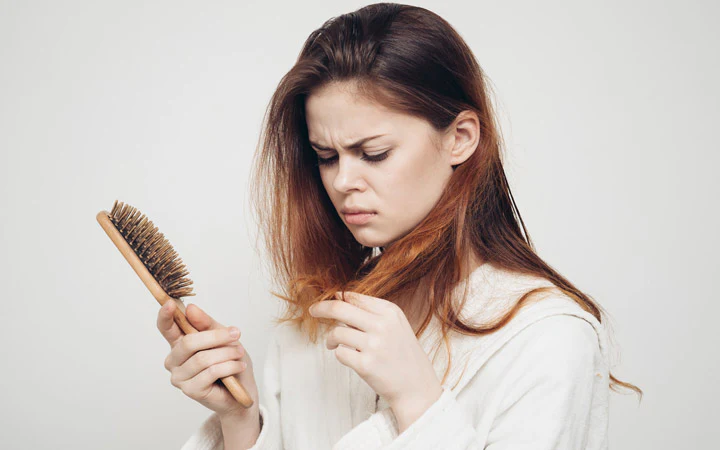
When your body goes through stress, it produces a hormone called cortisol. High cortisol levels can disturb the natural hair growth cycle. Normally, hair grows in phases — growth, rest, and shedding. Stress pushes more hair follicles into the shedding phase prematurely.
This condition is commonly known as stress-induced hair shedding, and in most cases, hair regrows once your body regains balance.
Other contributing factors include:
- Poor sleep
- Nutritional deficiencies
- Sudden weight loss
- Emotional trauma
How to Stop It Naturally Support Your Scalp Health
Your scalp is the foundation of healthy hair growth. Start by using:
- A mild, sulfate-free shampoo (to avoid stripping natural oils)
- A lightweight scalp serum containing caffeine or peptides (to stimulate roots)
- A nourishing hair oil once or twice a week (improves blood circulation)
Avoid aggressive rubbing while washing.
Hair is primarily made of protein. Without proper nutrition, recovery slows down. Include:
- Protein-rich foods (eggs, lentils, paneer, nuts)
- Iron-rich foods (spinach, dates, pomegranate)
- Healthy fats (seeds, almonds)
- Plenty of water
If hair fall continues for months, consider consulting a doctor for blood tests.
Stress management is not optional — it’s essential.
- 30 minutes of walking daily
- Yoga or breathing exercises
- 7–8 hours of uninterrupted sleep
- Reducing screen time before bed
Consistency in routine helps restore your hair cycle gradually.
What You Should Avoid
- Tight ponytails or braids
- Excessive heat styling
- Chemical treatments during heavy shedding
- Skipping meals
- Switching shampoos too frequently
Stress-related hair fall is usually temporary, but recovery requires patience. Instead of reacting with panic, focus on calming your body and strengthening your scalp from within.
Healthy hair growth begins with internal balance.